
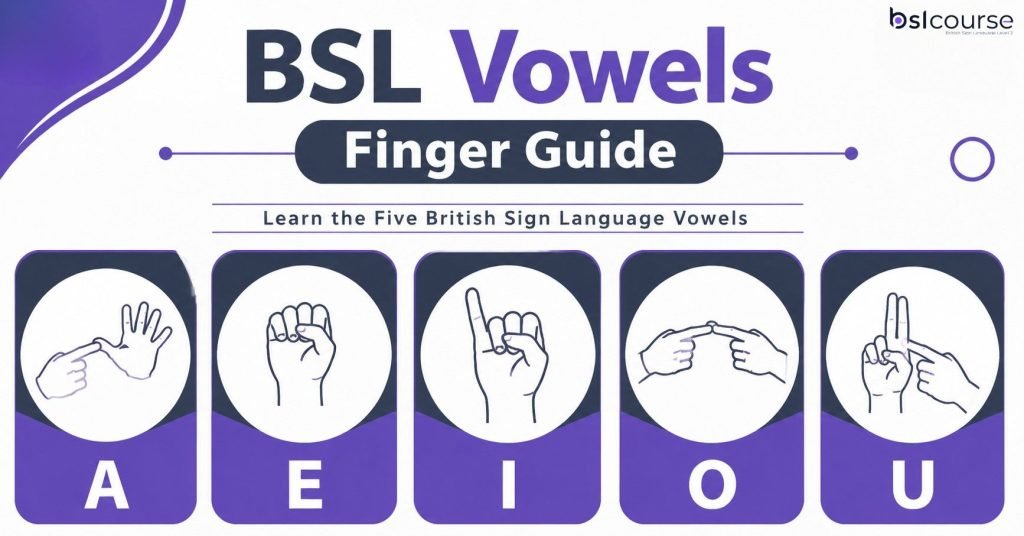
The 5 BSL vowels are one of the easiest and most rewarding parts of British Sign Language to learn. Their simple thumb-to-little-finger pattern helps beginners remember them quickly while building the coordination needed for fingerspelling.
With regular practice, correct hand positioning, and confidence, these signs will soon become natural. After mastering the vowels, continue learning the British Sign Language Alphabet A to Z to improve your fingerspelling skills and expand your communication abilities.
Practising the vowels with everyday words, names, and short phrases will strengthen your memory and improve accuracy. Remember, learning BSL is not only about hand movements but also about facial expressions, eye contact, and natural communication.
This BSL vowels finger guide gives you the perfect starting point for your BSL journey. Keep practising, stay consistent, and enjoy developing your skills as you learn more signs.
What Are BSL Vowels?
British Sign Language uses a two-handed fingerspelling alphabet. Instead of drawing letters in the air, most letters are formed using both hands. The vowels are particularly simple because they are made by tapping different fingers on your non-dominant hand.
The five vowels are:
- A
- E
- I
- O
- U
Unlike many consonants, each vowel follows a logical order from your thumb to your little finger. This makes them much easier to remember than learners often expect.
Why Learn the BSL Vowels First?
Learning the vowels first provides several advantages.
- They appear in almost every word.
- They are easy to memorise.
- They help you become comfortable using both hands together.
- They improve your fingerspelling accuracy.
- They prepare you for learning the complete British Sign Language alphabet.
Many beginners discover that once they remember the vowels, learning the remaining letters becomes much less intimidating.
BSL Vowels Finger Guide : Learn the 5 Vowel Signs
1. Sign A
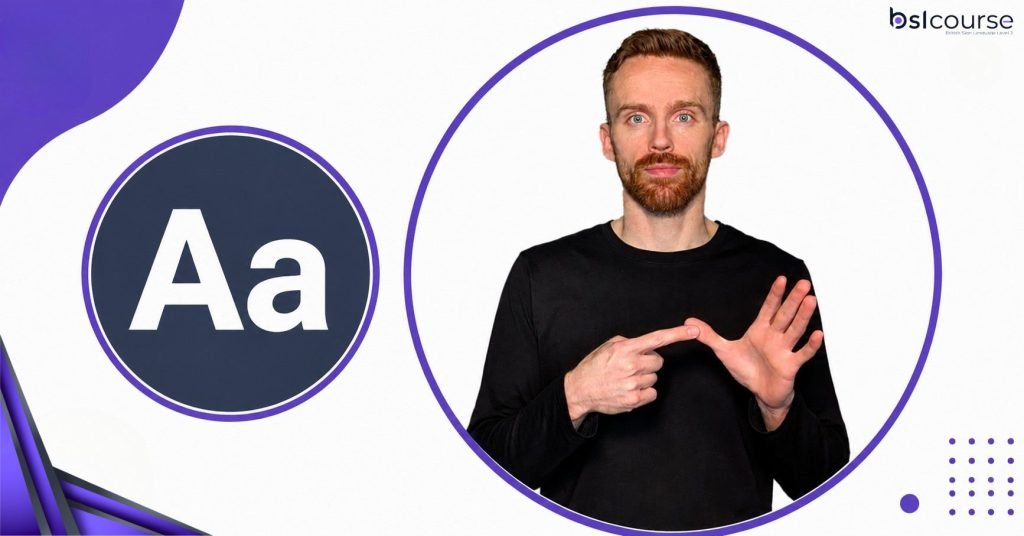
To sign A, hold your non-dominant hand open and relaxed. Use the index finger of your dominant hand to gently tap the tip of your thumb. Keep your movement small and controlled.
Remember: A = Thumb
2. Sign E
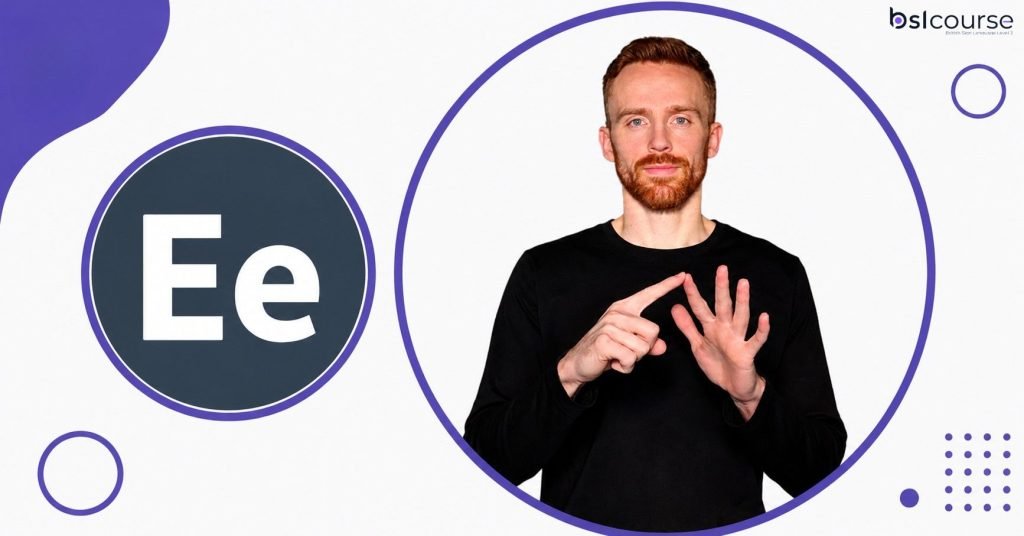
For E, keep the same hand position and tap the tip of your index finger with your dominant index finger. There is no need to change your overall posture or move your hands significantly.
Remember: E = Index finger
3. Sign I
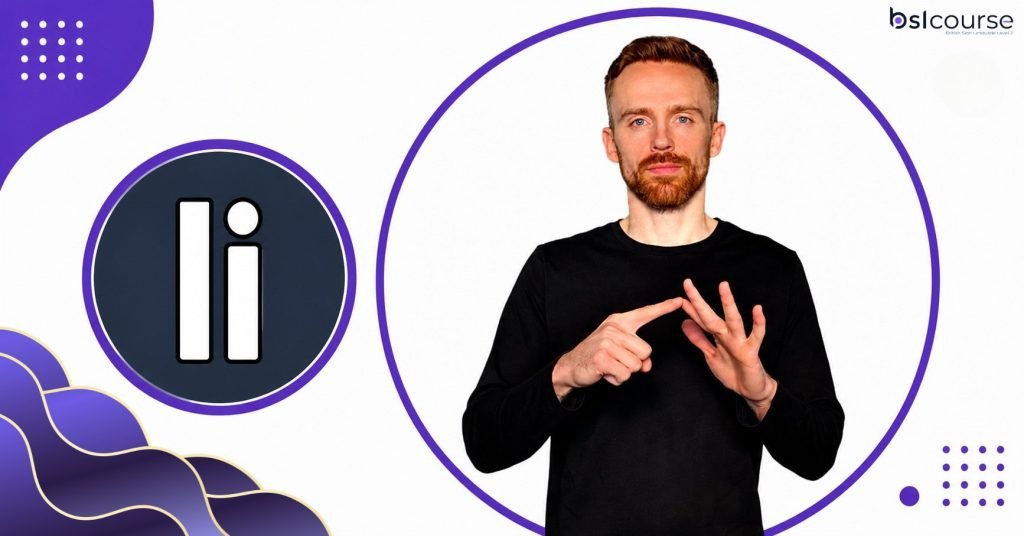
To sign I, move to the middle finger and gently tap its tip. Focus on making the movement clear rather than fast.
Remember: I = Middle finger
4. Sign O

For O, tap the tip of your ring finger using your dominant index finger. Keep your hands relaxed and use one clear tap.
Remember: O = Ring finger
5. Sign U

Finally, sign U by tapping the tip of your little finger. This is the final position in the five-vowel sequence.
Remember: U = Little finger
BSL Vowel Finger Guide
| Vowel | Finger to Tap |
| A | Thumb |
| E | Index finger |
| I | Middle finger |
| O | Ring finger |
| U | Little finger |
Easy Way to Remember the Sequence
The easiest way to remember the BSL vowels is to think of them as moving across your hand:
A → E → I → O → U
Thumb → Index → Middle → Ring → Little
Start slowly and practise each vowel individually before combining them. Once the finger positions become familiar, practise the full A – E – I – O – U sequence repeatedly to develop accuracy and muscle memory.
6 Basic Rules for Signing BSL Vowels
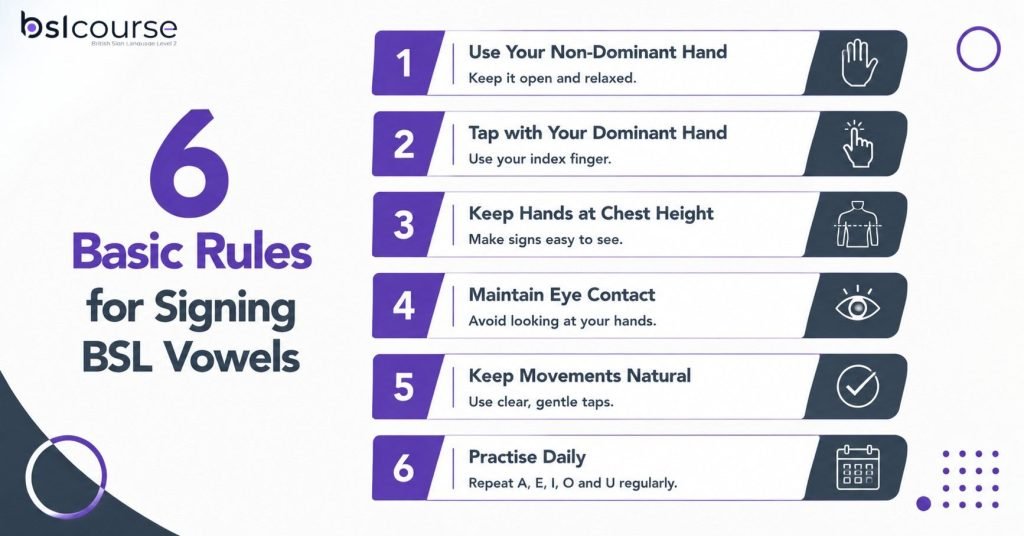
Following a few simple rules will make your signing much clearer.
1. Use Your Non-Dominant Hand as the Base
Keep your non-dominant hand open, relaxed and steady in front of your chest. This creates a clear base for each vowel sign and helps you maintain consistent hand positioning.
2. Use Your Dominant Hand to Tap
Use your dominant index finger to gently tap the correct finger on your other hand. Keep the movement controlled and avoid using multiple fingers.
3. Keep Your Hands at Chest Height
Position your hands around chest height so your signs remain clearly visible. Avoid holding them too low, as this can make the signs harder to follow.
4. Maintain Eye Contact
Try to maintain natural eye contact while signing rather than constantly looking at your hands. This supports clearer and more natural communication.
5. Keep Movements Natural
Your movements should be simple, controlled and relaxed. Avoid exaggerated gestures or unnecessary movement. A single clear tap is enough for each vowel.
6. Practise Consistently
Regular practice helps you remember the correct finger positions and build muscle memory. Spend a few minutes each day practising A, E, I, O and U until the sequence becomes automatic.
How to Remember the BSL Vowels
Many learners remember the vowels using a simple visual journey across the hand.
Imagine walking across five fingers:
- Thumb = A
- Index = E
- Middle = I
- Ring = O
- Little = U
Practising this sequence several times each day helps develop muscle memory.
Within a short period, many learners can sign the vowels automatically without thinking about each finger individually.
5 Common Mistakes Beginners Make
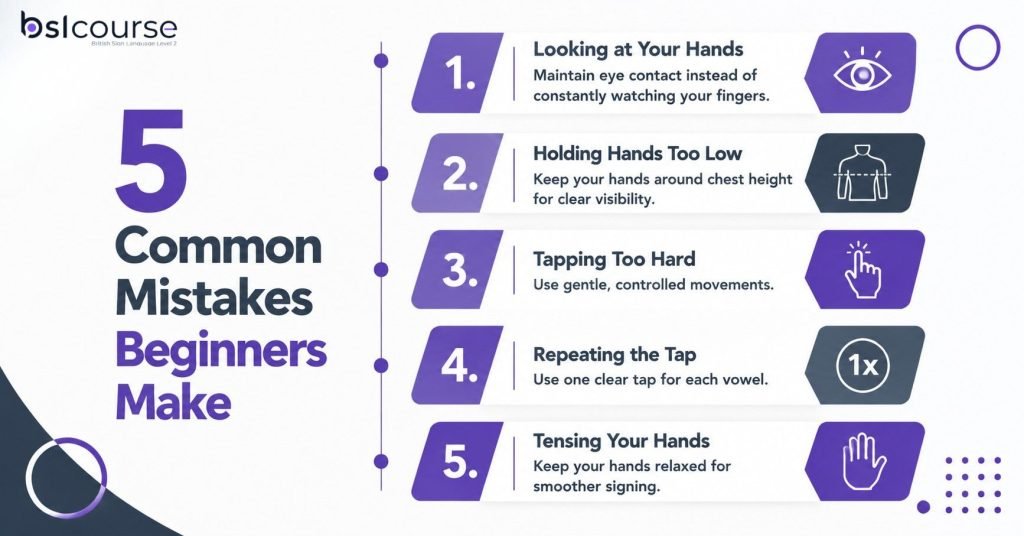
Every learner makes mistakes when first learning BSL. The key is to practise slowly, stay relaxed, and focus on clear, natural movements.
1. Looking at Your Hands
Beginners often look down at their fingers while signing. Try to maintain eye contact instead of constantly watching your hands. This helps make your communication more natural.
2. Holding Your Hands Too Low
Keeping your hands too low can make your signs difficult to see. Position them comfortably around chest height so the other person can clearly follow your movements.
3. Tapping Too Hard
BSL vowel signs should use gentle, controlled movements. Tapping too forcefully can make the sign look unnatural and adds unnecessary movement.
4. Repeating the Tap
Each vowel requires one clear tap on the correct finger. Repeating the movement can make your signing look uncertain or unclear.
5. Tensing Your Hands
Avoid keeping your hands and fingers stiff or tense. Relaxed hands make movements smoother, clearer and easier to perform, especially during longer fingerspelling practice.
Practice Exercises for BSL Vowels
Try these simple exercises every day.
| Exercise | Task | Practice |
| Exercise 1: Repeat the Vowels | Practise the vowel sequence in order. Repeat each vowel slowly and clearly. | A → E → I → O → U Continue repeating the sequence for one minute. |
| Exercise 2: Reverse the Sequence | Practise signing the vowels in reverse order to improve finger recognition and recall. | U → O → I → E → A Repeat the sequence several times until you can sign it smoothly without hesitation. |
| Exercise 3: Spell Everyday Words | Fingerspell common words that contain one or more vowels. Focus on accuracy before increasing your speed. | Cat • Dog • Book • Apple • School • House • Name • Home • Music • Family |
Why Learn British Sign Language?
Learning British Sign Language offers benefits that extend far beyond fingerspelling. It helps you communicate more effectively with Deaf people, improve accessibility and create more inclusive interactions in everyday life.
As your confidence grows, you can use BSL to communicate with Deaf colleagues, students, friends, family members and customers. These skills are particularly valuable in education, healthcare and customer service, where clear and respectful communication is essential.
Learning BSL can also support your professional development by increasing your awareness of different communication needs and promoting inclusive practices. Every new sign you learn helps break down communication barriers and contributes to a more accessible society.
If you would like to continue learning, several trusted organisations provide valuable information about British Sign Language, Deaf awareness and the Deaf community. The Royal Association for Deaf People (RAD) offers guidance on Deaf culture, communication, community services and support for Deaf people across the UK.
You can also learn British Sign Language through LearnDrive, where structured online courses help beginners develop practical signing, fingerspelling and communication skills at their own pace.
Frequently Asked Questions
Are BSL vowels difficult to learn?
No. The vowels are generally considered the easiest part of the British Sign Language fingerspelling alphabet because they follow a logical sequence across the fingers.
Which hand should I use?
Use your non-dominant hand as the base and your dominant hand to tap each finger.
How long does it take to learn the vowels?
Most beginners can remember the sequence after a few short practice sessions. Regular daily practice helps develop confidence and speed.
Do I need to memorise the entire alphabet before communicating?
No. Learning the vowels first gives you a strong starting point. You can gradually build your fingerspelling skills by learning the remaining letters.
Why is eye contact important in BSL?
Eye contact is an important part of Deaf communication. It helps maintain engagement and ensures your communication feels natural and respectful.
What is the best way if I want to Teach Myself BSL?
If you ask Can I Teach Myself BSL, the answer depends on using reliable resources and practising regularly. Combining online lessons, repetition, and interaction with BSL users can help improve learning progress.
Can children learn BSL vowels?
Yes. The simple finger sequence makes the vowels suitable for children as well as adult learners.
Conclusion
The five BSL vowels are one of the easiest and most rewarding parts of British Sign Language to learn. Their simple thumb-to-little-finger pattern helps beginners memorise them quickly while building the hand coordination needed for fingerspelling.
With regular practice, correct hand positioning, and confidence, these five signs will soon become natural. After mastering the vowels, continue learning the British Sign Language Alphabet A to Z to improve your fingerspelling skills and take the next step in your BSL learning journey.
Practising the vowels regularly by spelling names and everyday words will help strengthen your memory and make communication smoother. Small, consistent practice sessions can make a big difference as you continue developing your BSL skills.

