
If you’re searching for how to swear in BSL, here’s the short version: yes, British Sign Language has signs for swearing, built from handshape, movement and, crucially, facial expression, but learning them isn’t as simple or as harmless as picking up a fun party trick.
Swearing in BSL carries real cultural weight within the Deaf community, and using it carelessly can cause genuine offence.
This guide explains the cultural context behind swearing in BSL, shows you the actual sign for “swear”, and sets out clear dos and don’ts so you understand what you’re getting into before you use any of it. It’s written for curious learners and BSL students alike, not as a novelty phrasebook.
Is There Such a Thing as Swearing in BSL?
Yes. Like any full, natural language, BSL has vocabulary for expressing frustration, anger and intensity, including profanity.
It’s worth noting there are two completely different signs that can get confused here: the sign for swearing an oath (making a promise) and the sign for swearing in the profanity sense. This guide is only about the latter.
Profanity in BSL is offensive, and Deaf people use it sparingly, much as most hearing people don’t swear in every sentence either. It exists in the language, but that doesn’t mean it’s used casually or lightly.
What Is the Sign for “Swear” in BSL?

The BSL sign for “swear” combines a specific handshape with a sharp, deliberate movement:
- Start with a closed hand, with your little finger extended.
- Place the extended little finger at the corner of your mouth.
- Move the extended little finger forward sharply, away from your mouth.
The handshape and movement are only half the sign. Facial expression carries the other half, showing intensity, frustration or emphasis, and without it, the sign reads as flat or even meaningless.
This is true of BSL generally, but it matters more than ever with profanity, where the facial grammar often communicates as much as the hands do.
Why Do Facial Expressions Matter So Much When Swearing in BSL?
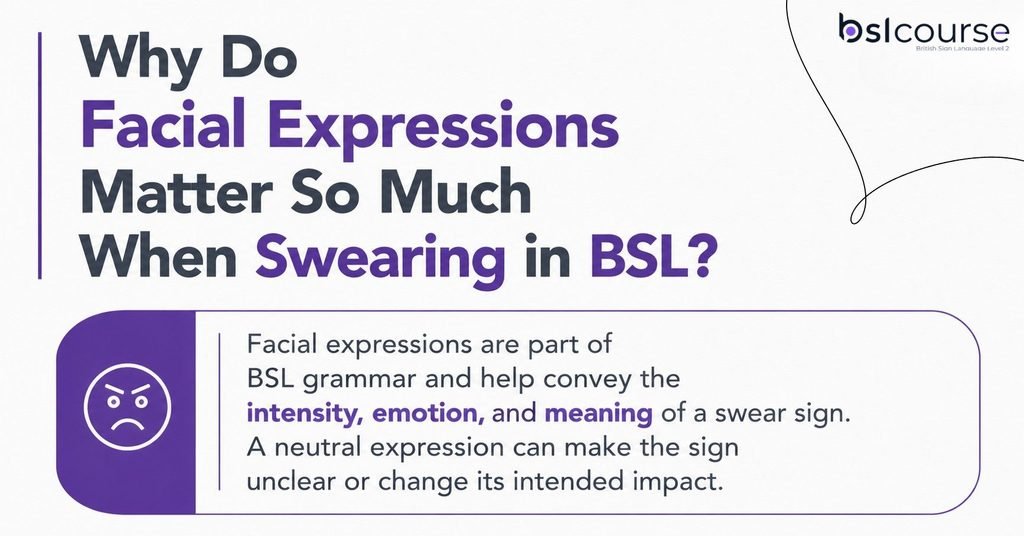
In BSL, facial expression isn’t decoration, it’s grammar. When it comes to swearing specifically, facial expression is what turns a handshape into genuine profanity rather than a neutral gesture, and it’s what conveys how strongly the signer feels.
Get the hand movement right but keep a blank face, and you haven’t really signed a swear word at all.
This is one of the reasons swearing is difficult to learn properly from a written guide or a short video clip: the facial component takes real observation and practice to get right, and getting it wrong can land very differently from what you intended.
What’s the Cultural Impact of Swearing in BSL?
Swearing carries weight in any language, spoken or signed, and BSL is no exception. It’s typically used to express frustration, anger or intensity, and Deaf people are frequently asked by hearing learners to teach them swear words, a request that can come across as reducing the language, and the community, to a novelty.
If you’re genuinely curious, that’s understandable. But it’s worth recognising that for many Deaf people, this particular question has become a tired one, asked more often out of curiosity than respect.
How Should You Approach Swearing in BSL?
What to do:
- Respect the cultural context and significance of swearing within the Deaf community.
- Pay close attention to facial expression, since it carries much of the meaning.
- Be considerate of the emotional weight swearing can carry for signers.
- Learn from experienced BSL tutors or instructors rather than guessing from short clips.
What to avoid:
- Using swear signs to offend, mock or insult anyone.
- Dismissing the cultural significance of profanity within Deaf culture.
- Using signs you don’t fully understand the meaning or context of.
- Overusing or misusing swear signs, treating them as a party trick.
One point worth repeating on its own: please don’t ask Deaf people at your local Deaf club or event to teach you swear words. Most members of the Deaf community find this request offensive, and it’s a fast way to damage trust you’ll want to build as a learner.
Has Swearing in BSL Changed Over Time?
Yes. Like all living languages, BSL evolves, and swearing is no exception. Usage and meaning shift across generations and regions, so a sign that felt strong to one generation of signers may read differently to another, and regional variation exists here just as it does across the rest of BSL vocabulary.
Is Swearing Part of Deaf Culture?
Yes, in the same way swearing is part of hearing culture. Some Deaf individuals use profanity to express themselves, just as some hearing people do in spoken language, and it isn’t unique to BSL either; obscene and profane vocabulary exists across sign languages used around the world.
FAQs
Does BSL have swear words?
Yes. BSL includes signs for profanity, built from handshape, movement and facial expression, though they’re used far less frequently than in casual spoken conversation.
What’s the difference between “swear” as in profanity and “swear” as in an oath?
They’re distinct signs with different meanings. “Swearing an oath” refers to making a promise, while the profanity sense of “swear” is what this guide covers. Confusing the two could lead to an awkward misunderstanding.
Is Please in BSL one of the first signs beginners learn?
Yes, Please in BSL is often included in beginner learning because it is commonly used in daily communication. It helps learners develop confidence when making requests and interacting with others.
Is it rude to ask a Deaf person to teach you to swear in BSL?
It can come across that way, yes. Many Deaf people are asked this frequently by learners, and it’s often experienced as reducing the language to a novelty rather than treating it with respect. If you want to learn, a qualified BSL tutor is a far better route than asking at a Deaf club or event.
Why do facial expressions matter so much when swearing in BSL?
Facial expression is part of BSL grammar, not an optional extra, and it’s what conveys the intensity and genuine meaning behind a swear sign. Without the right facial expression, the hand movement alone doesn’t fully convey profanity.
Should beginners learn to swear in BSL?
It’s not essential, and it comes with more cultural risk than reward for most learners. If you do want to understand it, learn from a qualified tutor who can explain the context properly, rather than picking it up casually from a video.
Conclusion
BSL, like any full language, includes signs for swearing, but the sign itself is only part of the picture. Facial expression carries much of the meaning, and the cultural context around profanity in the Deaf community deserves real respect, not casual curiosity.
If you’re serious about learning BSL, swearing is a small, culturally loaded corner of a much bigger language worth learning properly.
Next step: If you’re building your everyday BSL vocabulary, start with the fundamentals rather than novelty signs. A structured plan to learn your first 500 BSL signs can help you build practical vocabulary and signing confidence.

